
The Reserve Bank of India (RBI) has projected that crude oil prices will average USD 85 per barrel and the rupee will weaken to 94 against the dollar by FY27, according to its bi-annual Monetary Policy report.

In a statement issued by Iran's consulate in Mumbai, it said, "At present, Iran essentially has no floating crude or surplus available for international markets. The US Treasury Secretary's remarks appear aimed at reassuring buyers and managing market sentiment."

Equity SIPs are meant for long-term investors and choice of stocks should be made on fundamentals of the company.

Flexicap fund performance depends heavily on the fund manager's decisions.

Share of IPOs opening above issue price drops to 64.6%, median gains shrink sharply amid market volatility.

Trade deals ease risks for Indian equities, but weak demand and stretched valuations raise questions over whether optimism -- especially in smallcaps -- can turn into a sustained bull run, points out Debashis Basu.

The Indian government has increased the export duty, or windfall tax, on diesel to Rs 55.5 per litre and on aviation fuel (ATF) to Rs 42 a litre, effective immediately, to boost domestic availability and prevent exporters from exploiting global price differences.

HDFC Bank is engaging external legal firms, both domestic and international, to investigate the circumstances surrounding former part-time chairman Atanu Chakraborty's resignation.

'When markets go into a budget with excessive optimism, the risk of disappointment is higher.'

Bharat Electronics, Power Grid, NTPC and HDFC Bank were among the other major gainers. However, Infosys, Tata Steel, Eternal and Tech Mahindra were among the laggards.

India's foreign exchange reserves have surged by $3.825 billion to reach $700.946 billion as of April 10, marking a significant milestone for the country's financial stability.

Analysts are revising down India Inc's financial year 2026-27 (FY27) earnings growth forecasts, citing persistently high crude oil prices above $100 a barrel due to the West Asia conflict, which is expected to dent corporate financial performance in the coming quarters.

The majority of investors fail to reach their financial goals, even if they started with a well-defined financial strategy. This isn't just about market volatility; it's a complex interaction of factors that include human psychology, inconsistent habits and lack of proper monitoring.

Indian benchmark indices Sensex and Nifty rebounded sharply on Monday, driven by a correction in crude oil prices due to ceasefire efforts in West Asia and strong buying in bank stocks.
The majority of investors fail to reach their financial goals, even if they started with a well-defined financial strategy. This isn't just about market volatility; it's a complex interaction of factors that include human psychology, inconsistent habits and lack of proper monitoring.

Among Sensex firms, Eternal, Infosys, Asian Paints, HDFC Bank, Bajaj Finserv and Titan were the major gainers. However, Tata Steel, Tech Mahindra, Adani Ports and Bharat Electronics were among the laggards.

Wipro reported Q4FY26 IT services revenue of $2.6 billion, a modest 0.2 per cent Q-o-Q constant currency growth, with adjusted operating profit margin beating estimates at 17.2 per cent. The company announced a significant share buyback of ~15,000 crore, but faces near-term growth challenges, particularly in the BFSI segment, and has issued a soft Q1FY27 revenue guidance.

Inflows into mutual fund (MF) schemes via systematic investment plans (SIPs) have topped Rs 3 trillion for the first time in a calendar year, as investors increasingly rely on the staggered investment route amid market volatility.

Stock markets closed higher on Friday after the Reserve Bank of India kept its benchmark interest rate unchanged as expected and proposed allowing banks to lend to Real Estate Investment Trusts (REITs) with certain prudential safeguards to deepen the financing pool for the real estate sector.

The World Bank has affirmed India's strong position to withstand the current global energy shock, citing high foreign exchange reserves, fiscal space, and low inflation as key buffers supporting continued growth despite international headwinds.

India's pharmaceutical exports have shown robust growth, reaching over USD 28 billion, despite global economic challenges. The sector is projected to reach USD 130 billion by 2030.

The Federation of Indian Export Organisations (FIEO) has appealed to the Reserve Bank of India (RBI) for liquidity support to Indian exporters, citing a significant increase in freight costs and extended payment cycles due to the ongoing West Asia conflict.

'In investing, poor sentiment is always a good vintage to build a portfolio.'

'In my entire career, whenever friends, relatives, or associates have sought my counsel, I have told them consistently: Stay away from equities. Buy gold. Place funds in fixed deposits. Acquire some raw land.' 'That is all one genuinely needs to build meaningful, enduring wealth, without the attendant anxiety of equity market participation.'

'In a volatile global market, India is pursuing a low-risk, low-return policy, akin to a SIP -- slow, steady investment.' 'Pakistan is following a high-risk, high-return policy.'
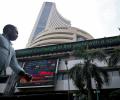
From the Sensex pack, Asian Paints, ICICI Bank, PowerGrid, Larsen & Toubro, Bajaj Finserv, Bharti Airtel, Sun Pharmaceuticals, Maruti Suzuki India, Axis Bank, UltraTech Cement and HCL Technologies were the only gainers. On the other hand, Eternal, Tata Motors' commercial vehicles arm, Mahindra & Mahindra, Tata Steel, Bharat Electronics Ltd, Tata Motors Passenger Vehicles, Trent, Tata Consultancy Services, Hindustan Unilever, and Infosys were among the laggards.

Indian benchmark stock indices Sensex and Nifty rallied for the second consecutive day, closing nearly 1 per cent higher, driven by gains in metal and auto sectors and positive global market trends.

Foreign investors have withdrawn over Rs 88,000 crore from Indian equities this month, driven by geopolitical tensions, a weak rupee, and concerns about rising crude oil prices.

Leading jewellery companies, Titan Company and Kalyan Jewellers India, have reported better-than-expected top-line growth in Q4 FY26, driven by robust same-store sales growth, higher average ticket sizes, and an improvement in buyer growth, signalling a strong recovery in demand.

Brent crude prices surged sharply on Monday, rising by more than 25 per cent to $116.5 per barrel, amid the ongoing conflict in West Asia, which has made crude prices bullish.

'People become guided by emotions, fear of missing out, and greed. They tend to invest in booming sectors that may prove exceptionally expensive.' 'Typically, that represents the peak, and subsequently, they lose substantially.'

Godrej Consumer Products Ltd (GCPL) delivered a robust Q4FY26 performance, with steady demand in India and signs of stabilisation in international markets, despite persistent inflationary pressures. The company expects to maintain profitability in FY27 through strategic cost management and pricing adjustments.

The Indian rupee depreciated significantly against the US dollar, reaching a new all-time low due to rising oil prices, a strong dollar, and ongoing geopolitical concerns. Domestic equity market declines and foreign investment outflows further contributed to the rupee's weakness.

Indian realty developers are contemplating price increases for ongoing and upcoming projects to offset margin pressures caused by rising input costs and supply chain disruptions, exacerbated by the West Asia conflict. Input and labour costs have surged by 5-12%, directly impacting developer margins, especially for under-construction projects.

Experts expect the trend to continue in the near term.

Indian bank credit expanded by 16.08 per cent year-on-year in FY26, marking its fastest pace since FY24, while deposits grew by 13.47 per cent, according to RBI data. Experts caution that year-end figures may be inflated due to reporting date changes, but acknowledge strong momentum in corporate, MSME, and retail segments.

Indian equities trading activity saw a moderation in FY26, with cash market turnover declining and derivatives growth remaining subdued due to regulatory tightening and weak market performance. Further impacts are expected from new RBI norms and a hike in Securities Transaction Tax (STT).

West Asia conflict triggers sharp sell-off in Indian markets, with realty, banking and auto stocks leading losses amid energy shock fears.
Diversification and asset allocation can reduce uncertainty

Mutual fund investment through systematic investment plans (SIPs) has surged to an all-time high of Rs 3.34 lakh crore in 2025, driven by growing investor appetite for disciplined, long-term wealth creation.
 © 2026 Rediff.com - Advertise with us - Disclaimer - Privacy Policy - Sitemap - Feedback - About us - Terms of use - Grievances